
February Hand + Soul Block: Curiosity
About the Block
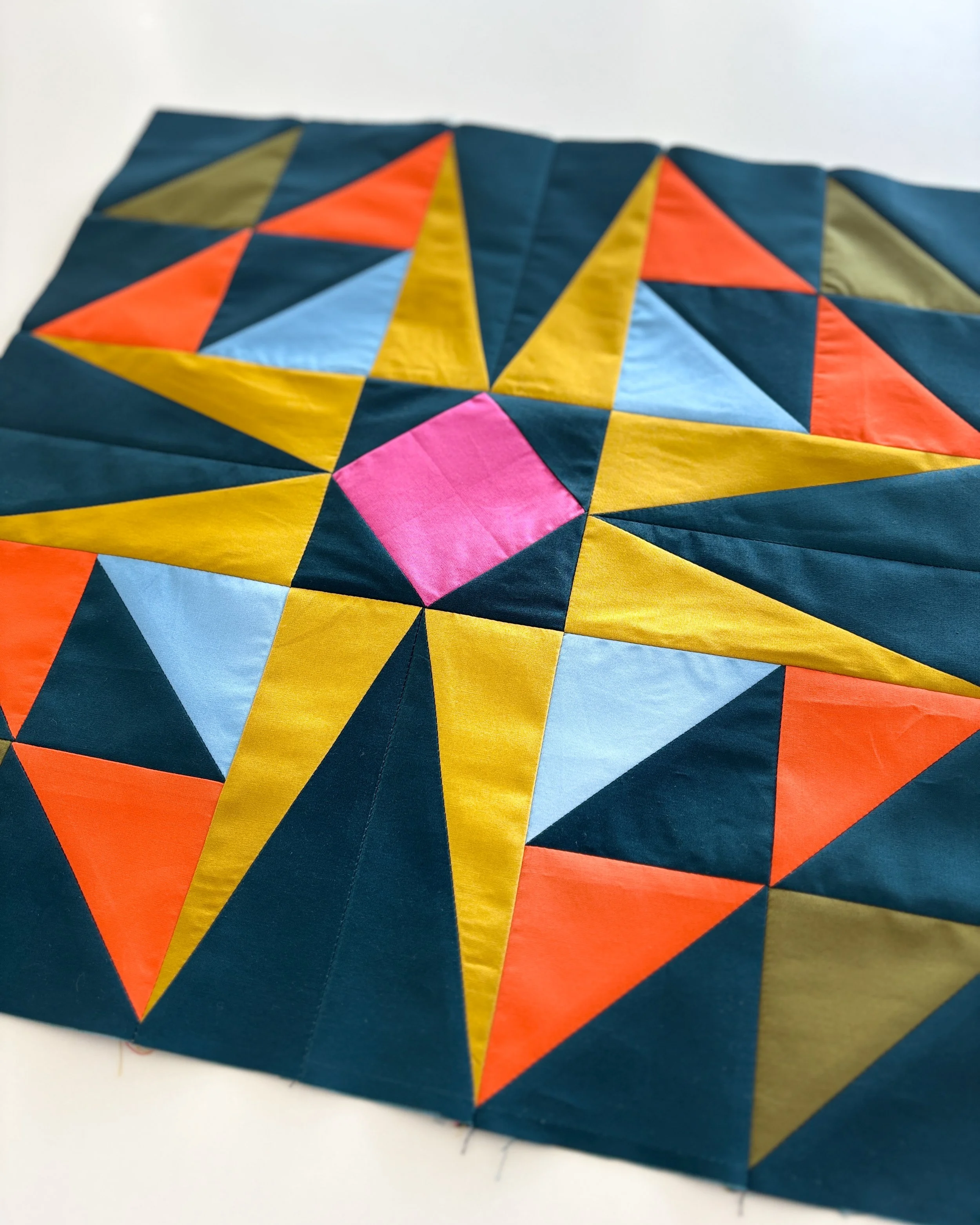
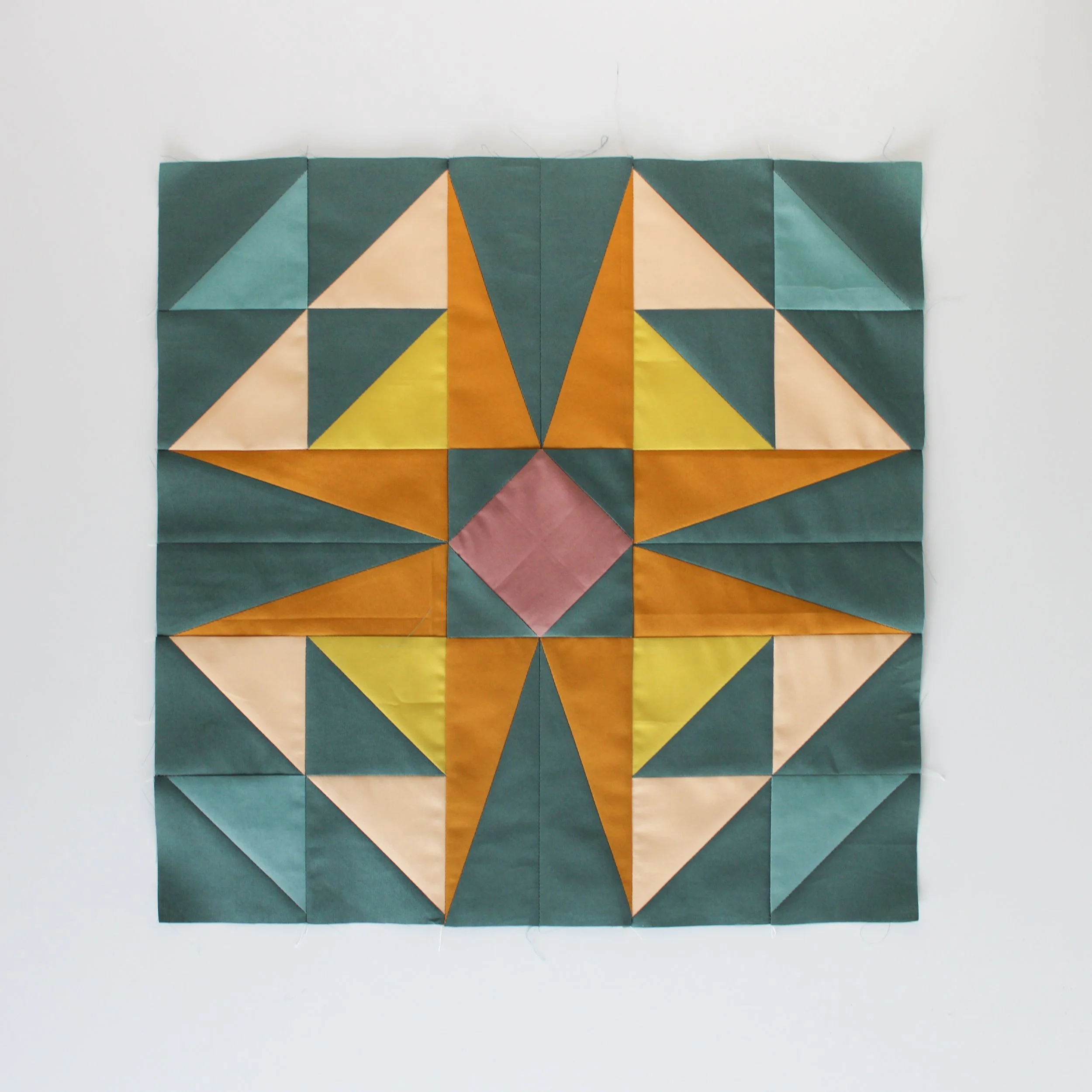
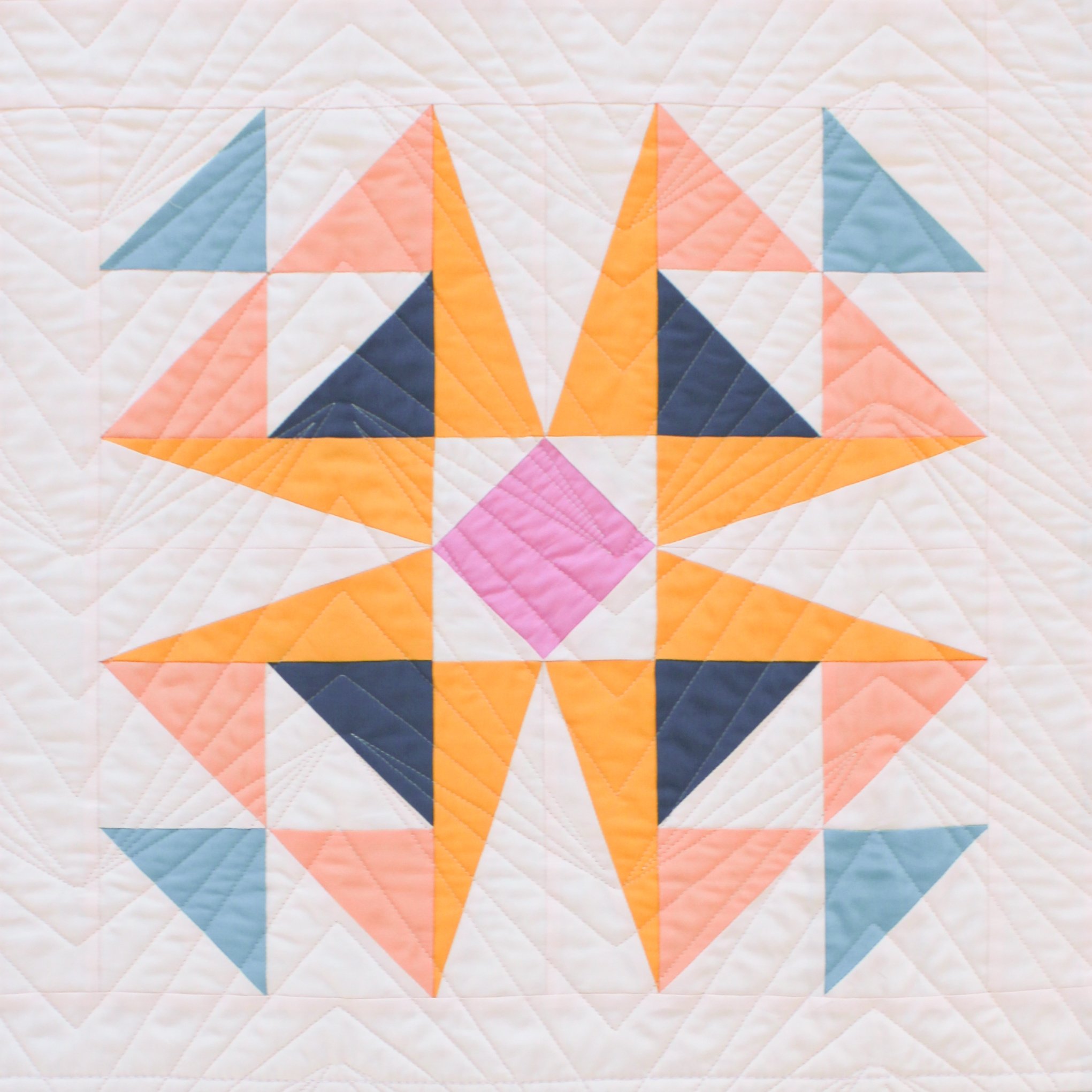
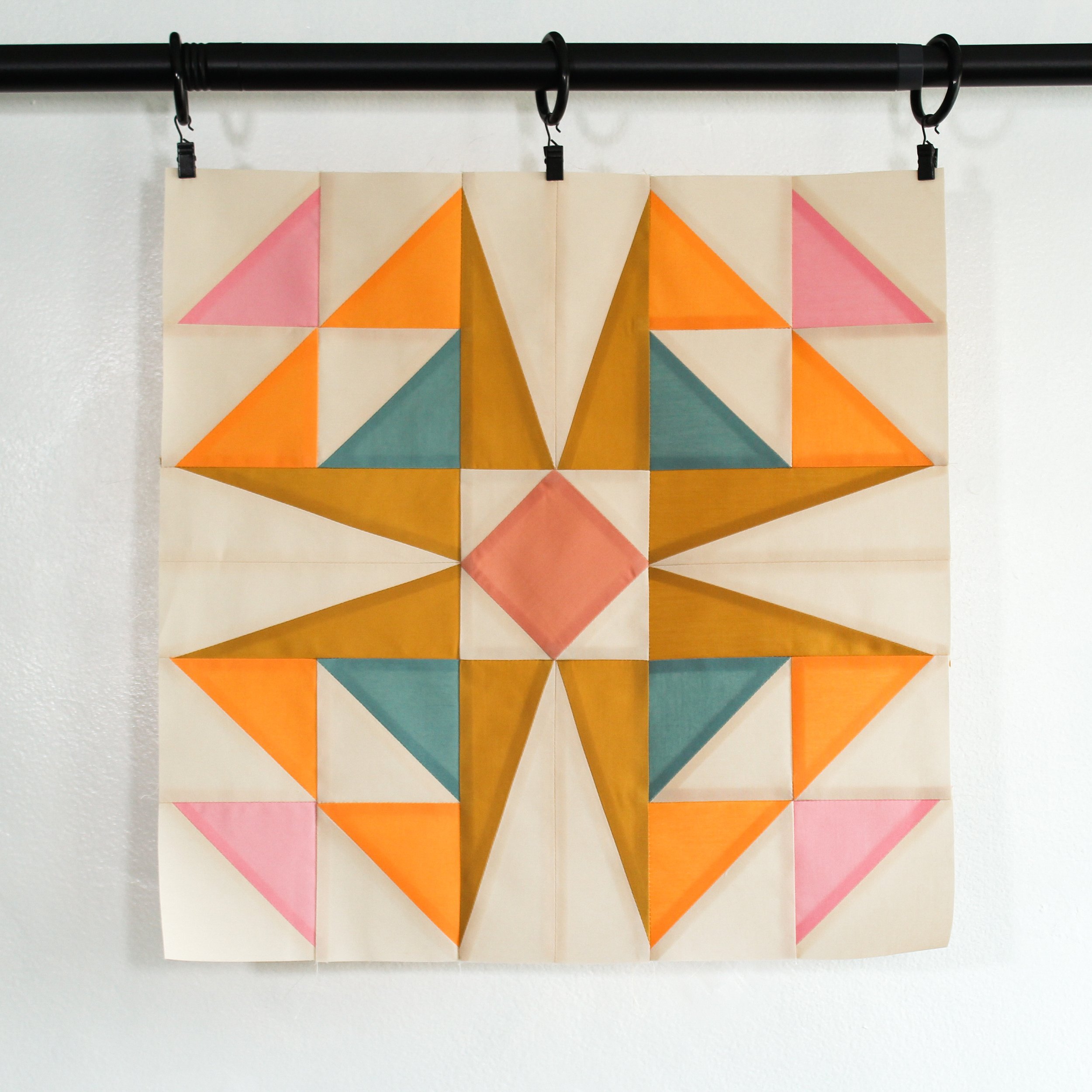
Welcome to February and our next though-provoking theme: Curiosity. This block is inspired by a beautiful Zen Buddhist concept called Shoshin, or Beginner's Mind.
What is Beginner's Mind? It's the practice of approaching anything—a new skill, a familiar routine, or even a relationship—with the fresh, eager, and open eyes of a beginner. It means letting go of our expert status, our assumptions, and the "I already know how this goes" attitude. A beginner's mind is full of possibilities; an expert's mind is full of limits.
Think of a child encountering fabric for the first time. They don't see "quilting cotton" or "expensive silk." They see texture, color, and potential. They aren't worried about the "right" way to use it. That is the spirit we're channeling this month. We’re not ignoring our hard-won skills; we’re simply draping them in a cloak of curiosity, asking what if? and discovering that the most familiar paths can lead to surprising new places when walked with open eyes.
The Curiosity block with its radiating, starburst design visually illustrates the expansion of possibilities when we release what we think we know. Supposed expertise and assumptions often act as blinders; approaching people, challenges, and situations with genuine curiosity and openness allows us to see and appreciate what would otherwise be overlooked or dismissed.
Details & Techniques
We are introducing some new techniques as part of the Curiosity block, namely: Two-at-a-time half-rectangle triangles (HRTs) and the square-in-a-square unit. But, fear not! Both of these units have room for trimming in this pattern, which allow us to breathe easy at the sewing machine, and gives us the chance to get things nice and tidy on the cutting mat.
Block Tips & Tricks
Making Half-Rectangle Triangles. This unit is so fun and versatile, and just requires a basic understanding of its geometry and a few “reps” to really master it. Unlike with HSTs, seam direction matters and is static for HRTs - though, color placement within an HRT can be flipped by rotating it. The pattern specifies A vs. B rectangles that are used for right-leaning vs. left-leaning HRTs, respectively, since they are constructed differently. So, be sure to pay close attention and ensure you are making the proper number of HRTs in each direction.
The two-at-a-time method for HRTs is quite similar to the two-at-a-time method for HSTs, but a common mistake is to improperly position the rectangles when placing them right sides together before sewing. Be sure to offset them rather than place one directly on top of the other.
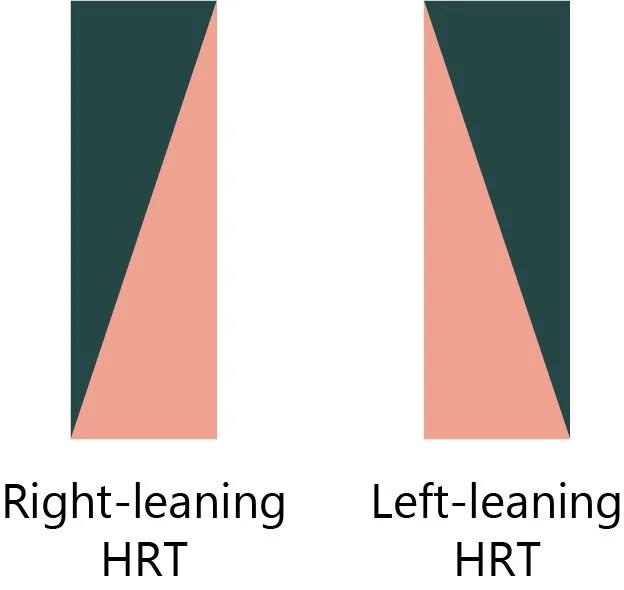
Seam direction matters with half-rectangle triangles since right-leaning and left-leaning units are constructed differently.
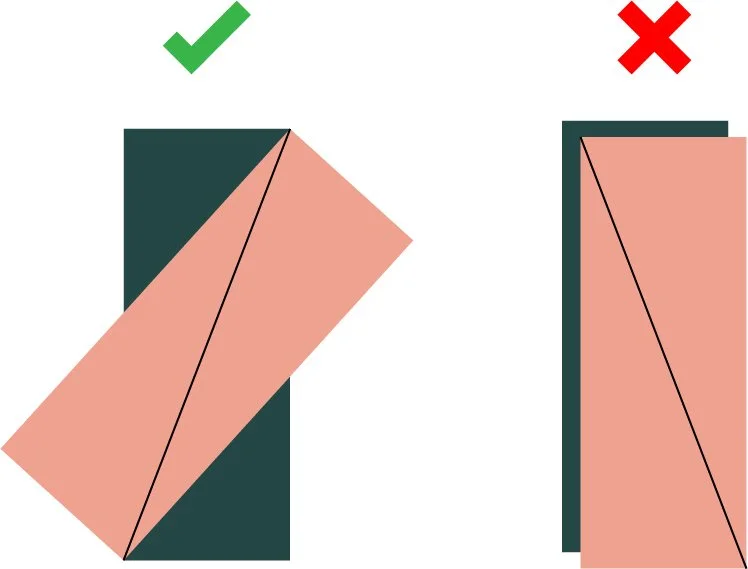
Be sure to offset the rectangles when placing right sides together before sewing.
Trimming Half-Rectangle Triangles. The key thing to remember when trimming these units is that we want the diagonal seam to run through the corners of what will be the finished HRT - i.e., the rectangle that is a 1/4” inside our trimmed HRT (to account for seam allowance on all sides). And since the slope of HRT diagonal seams are not the nice-and-easy 45 degrees like they are for HSTs, the HRT diagonal seam will not run through the corner of our trimmed unit.
The magic points to align on top of the diagonal seam are a square 1/4” inside the corners of the trimmed dimensions, which we will mark on the ruler and then use to line up and trim our HRTs.
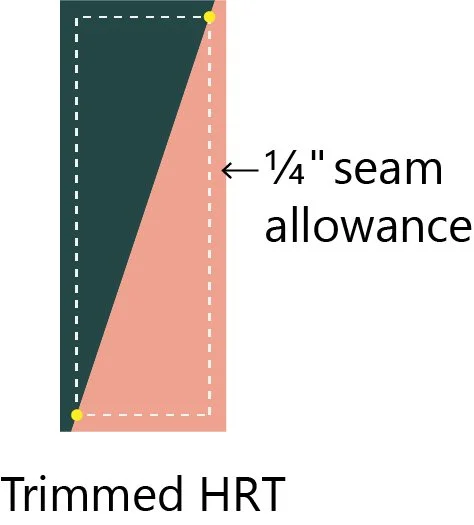
Notice how points are blunted in the trimmed HRT, but the diagonal seam runs through the corners of what will be the finished HRT (the dotted-line rectangle).
February Partners
Hand + Soul Block of the Month members gain exclusive access to discounts from our monthly partners, as well as a chance to win prizes every month!


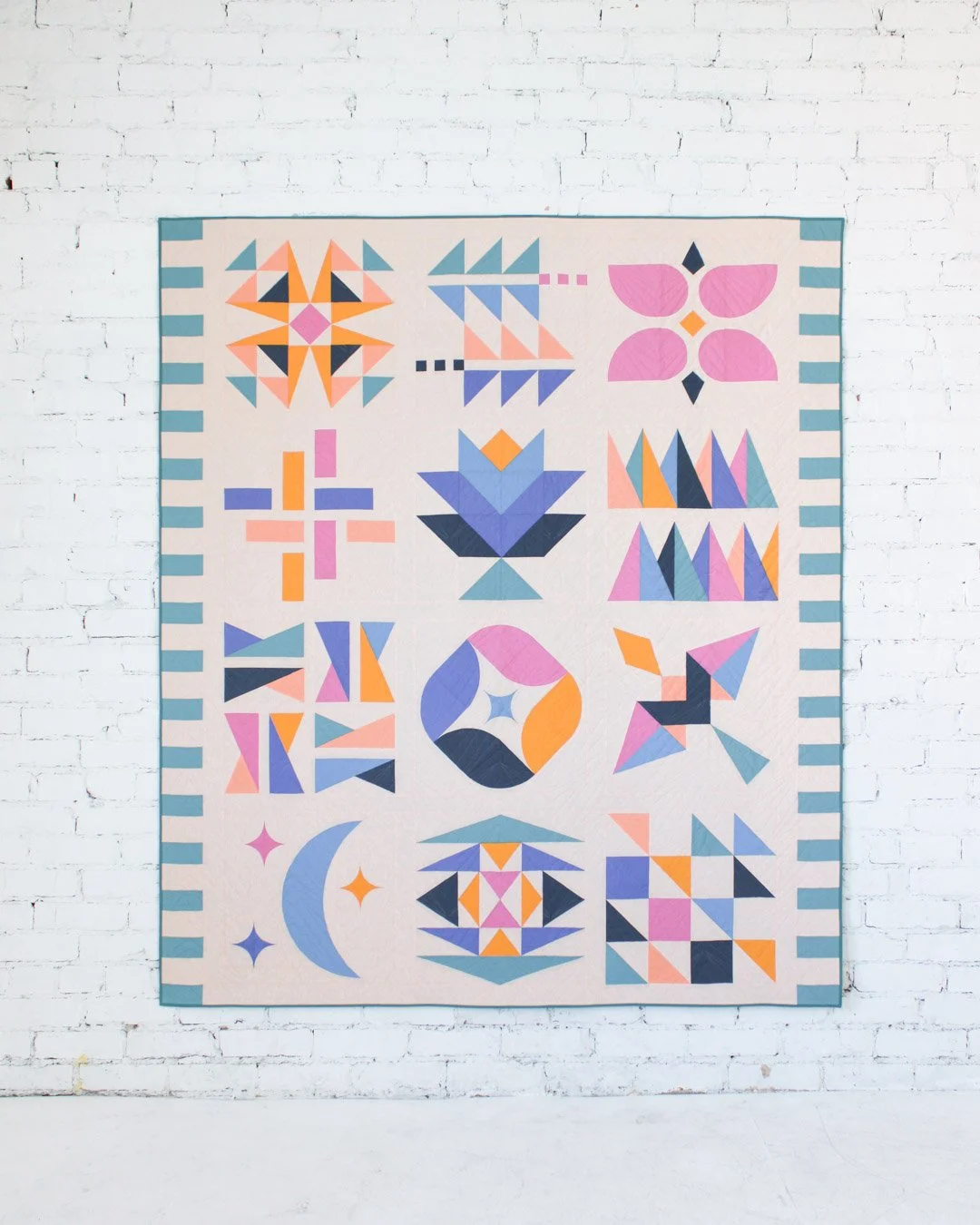
Join us for a year of sewing and community!
Its not too late to sign up! Read all the details here!
"I want to sew & reflect..."
"I want community..."